Every man who has grown out a short cut knows the valley: months two and three, where the hair is too long to be the old style and too short to be the new one, and every mirror argues for shaving it off and starting over. Most grow-outs die in that valley, not because the target style would not suit the man, but because nobody told him the middle was a known stage with known fixes. Growing hair out is a project with a timeline, and it goes far better managed than endured.
This guide maps the grow-out stage by stage for Charlotte men, the specific problem of each phase, and the barber visits that solve them. The key idea is counterintuitive: growing hair out requires more barber visits, not fewer, just different ones. Cleanup cuts that protect length while removing bulk are what carry a grow-out through the valley to the style you actually wanted.
Why the middle looks so bad
Hair grows at roughly half an inch a month, evenly, but a haircut does not grow out evenly because it was not cut evenly. The short faded sides reach awkward length within weeks and start to wing out over the ears, while the longer top still lacks the weight to lay down. Cowlicks that a short cut simply removed reappear with opinions. The result reads as shapeless even though nothing is wrong; each part of the head is just passing through its own worst week at a different time.
Weight is the missing ingredient, and only length supplies it. Hair that will eventually lay flat stands up or out while it is short, because there is not enough of it to bend under its own weight. This is why judging a grow-out at month two is meaningless. You are not looking at a failed version of the style; you are looking at ingredients, and the recipe is time plus strategic cleanup.
| Stage | What happens | The move that fixes it |
|---|---|---|
| Weeks 1-3 | Sides feel bulky before the top feels long | Nothing yet; this is normal, resist the panic cut |
| Months 1-2 | The awkward shelf where sides wing out | A cleanup that debulks the sides without touching the top length |
| Months 3-4 | Top reaches the ears, cowlicks assert themselves | Reshape the outline and start training the new direction with product |
| Months 5-6 | Nearly a style; ends look thin and uneven | A dusting trim on the ends only, keeping every bit of gained length |
| Month 6 on | The new style, with a full maintenance rhythm | Regular light trims every 6-8 weeks to keep ends healthy |
The cleanup cut: your barber's real job here
A cleanup during a grow-out removes bulk and reshapes the outline without touching the length you are growing. The sides get debulked so they stop winging, the neckline and edges get re-established, and the top is left alone except for damaged ends. Done every four to six weeks, these visits keep you looking deliberate the whole way through, like a man mid-plan rather than mid-neglect. Tell your barber the target style at the first cleanup, with a photo; every cleanup after that is aimed at it.
Styling bridges the gaps between cleanups. A small amount of product, applied to damp hair and worked in the direction you ultimately want, trains the daily routine while the weight builds. Hats are legitimate equipment during the valley, though a barber at a shop like Major Barbershop can usually shorten the hat phase considerably with the right cleanup and the right product suggestion for your hair type.

The other side: maintaining length well
Reaching the target is not the finish. Longer hair needs its own maintenance: light trims every six to eight weeks that remove split ends before they travel up the shaft, because damaged ends are the main reason grown-out hair starts looking thin and frizzy. One paradox of length: trimming a little, regularly, is how hair gets to look its longest, since the ends stay full instead of tapering into wisps.
Care habits change with length too. Longer hair needs conditioning the short version never did, gentler handling when wet, and less aggressive towel drying. Your barber can adjust the plan as the style settles. The men who succeed at growing hair out treat it as a year-long project with a professional on the team, and the men who fail treat it as simply not cutting. The difference shows by month three.
Common questions
How long does it take to grow out a short cut?
At about half an inch a month, going from a short crop to a medium, swept style takes roughly five to seven months. The awkward middle occupies months two and three of that.
Should I really see a barber while growing my hair out?
Yes. Cleanup cuts that remove bulk and fix the outline without touching your growing length are what keep the process looking intentional instead of neglected.
My hair sticks straight out at the sides. Will it ever lay down?
Almost always, yes. Sides wing out because the hair is too short to bend under its own weight. Length fixes it; debulking cleanups and product manage it meanwhile.
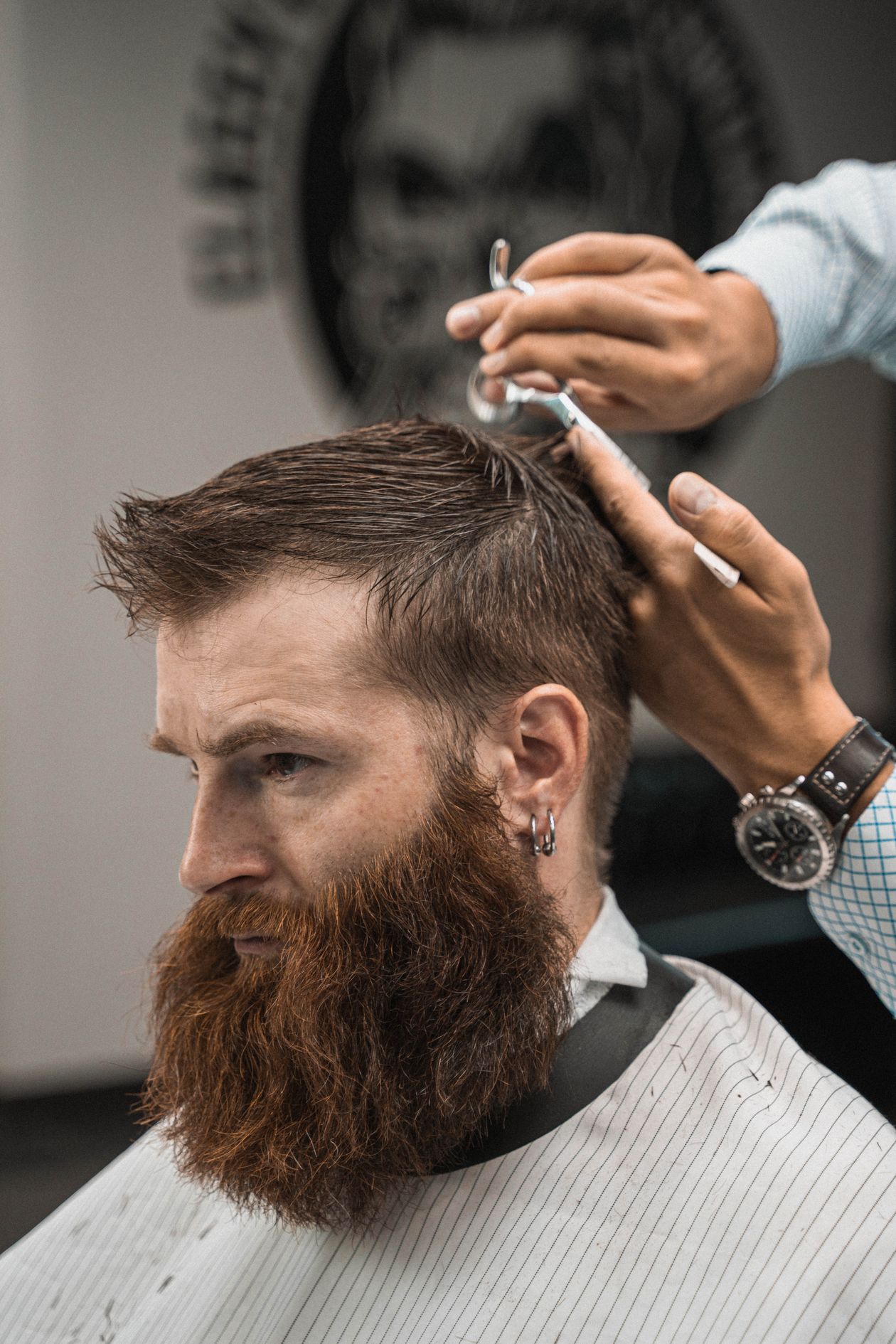
Photos in this guide are representative stock images.
← All guides from Major Barbershop← Back to Major Barbershop