Beard services confuse men at the menu, because trim and detail sound like sizes of the same thing. They are different jobs. A trim manages length and bulk. Detailing manages lines and edges. A beard can need either, both, or one now and the other later, and booking the wrong one explains most disappointing beard appointments: the man who wanted a reshaped, sculpted outline got an even shortening, tidy but unchanged, and left wondering what he paid for.
This Charlotte guide separates the two services plainly: what each involves, the signs your beard is asking for each, and how they combine in a full beard appointment at a shop like Major Barbershop, where beard trim and detail is a listed service of its own. Once the distinction is clear, your beard appointments get shorter, cheaper in the right places, and better looking in all of them.
The trim: length, bulk, and evenness
A trim takes the beard down to a chosen, even length and removes the accumulated unevenness of home maintenance: the patch one sideburn grows faster, the chin that has outpaced the cheeks, the flyaway ends that make a beard look scruffy regardless of its actual length. Clippers over a comb, or freehand shear work on longer beards, re-establish a uniform field. The beard keeps its existing shape and outline; it just becomes the tidy version of itself.
Book a trim when the beard's shape still pleases you but its condition does not: it looks puffy, uneven, or dry-ended, or the length has crept past where you like it. Growing a beard out also runs on trims, counterintuitively, because evening the bulk every few weeks keeps a growing beard looking intentional rather than accidental. Most beards want a trim every two to four weeks, at or between haircut visits.
- Set the length. Clippers with a guard take the beard to an even bulk all over, following the grain.
- Shape the outline. The cheek line and neckline are placed for your face, the decisions that define the whole beard.
- Detail the edges. Trimmer and razor clean the lines, the mustache is lifted off the lip, and strays are removed.
- Blend to the cut. Sideburns and the transition into the haircut are blended so beard and hair read as one style.
- Finish and condition. A hot towel or wash, then oil or balm worked through so the beard leaves soft, not stripped.
The detail: lines, edges, and architecture
Detailing is the architecture. The cheek line gets placed and cleaned, high and natural or lower and sharper, according to your face. The neckline gets set, usually following the curve about an inch above the Adam's apple and tapering toward the ears, which is the single line whose placement most changes how a beard reads: too high looks strained, too low looks like neglect. The mustache is lifted cleanly off the upper lip, edges around the mouth are opened up, and the razor finish makes every line crisp.
Book detail when the outline has blurred, when you are establishing a beard's shape for the first time, or before any occasion where the beard will be looked at closely. Detail work is also where a barber's judgment pays most visibly. Cheek and neck lines placed for your actual face, rather than a template, are the difference between a beard that looks grown and a beard that looks designed.
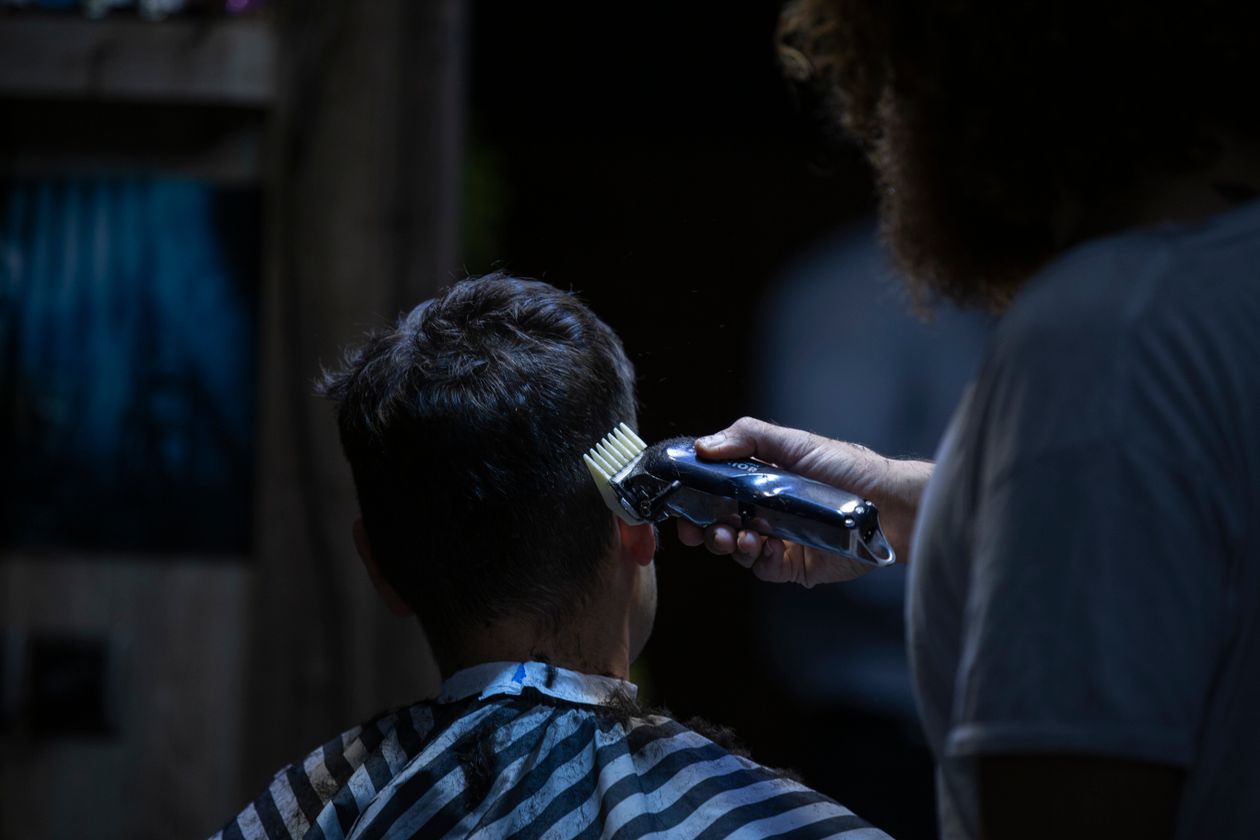
Both together, and keeping it at home
A full beard service does trim then detail in sequence, bulk first and lines second, because lines set on uneven bulk get re-cut as the length changes. If your beard needs both, booking the combined service beats alternating half-services. Between visits, home upkeep should protect the barber's lines rather than redraw them: clear stray hairs outside the established edges with a razor, never re-cut the cheek or neckline freehand, because one ambitious home session can undo the architecture.
Condition is the other home job. Beard hair is coarser than scalp hair and the skin under it gets dry, especially in winter heating and summer sun. A beard oil or balm worked through after a shower keeps both softer and reduces the itch and flaking that make men shave off beards they liked. Bring your questions to the chair: a barber who sees your beard monthly can calibrate product and interval better than any label can.
Common questions
How often does a beard need a professional trim?
Every two to four weeks suits most beards, often alternating with haircut visits. Fast, coarse growth sits at the frequent end; slow, fine growth stretches further.
Where should the neckline actually go?
The standard placement follows a curve roughly an inch above the Adam's apple, tapering up toward the ears. A barber sets it for your jaw and neck rather than by ruler.
Can a barber fix a neckline I cut wrong at home?
Usually, yes, though the fix may mean taking the beard slightly shorter to re-establish the line. Bring the problem in early; lines are easier to rescue before they creep further.
Photos in this guide are representative stock images.
← All guides from Major Barbershop← Back to Major Barbershop